I recently came across the numbers of convictions and executions in the latter half of 18th century England. The number of executions varied and it wasn’t immediately clear if there were any larger trends.
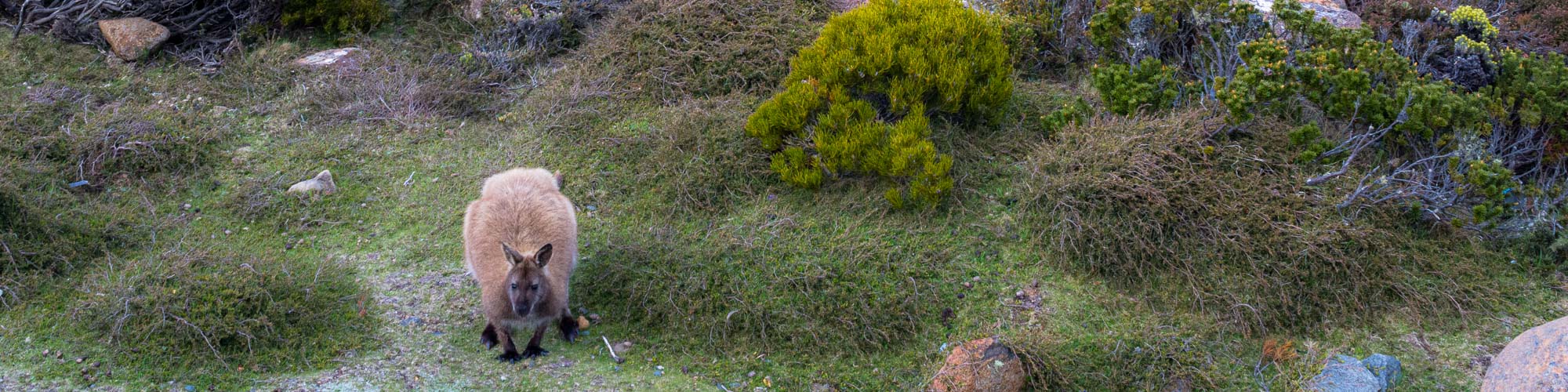
How many steps does it take to see a kangaroo? I started wondering this soon after moving to the center of the Australian Outback. So, with the assistance of my Fitbit, I started recording the number of steps I took after walking out the front door until I saw a kangaroo.
This notebook demonstrates some basic techniques for the Python library pandas. This is part II of the Pandas Cheat Sheet.
This post demonstrates some basic techniques for the Python library pandas.
The story of Schrödinger’s cat, a cat that, through quantum physics, is simultaneously alive and dead, has become ingrained in popular culture and many popular science articles. But as the physics behind it has become popularized, misconceptions have been introduced into the story. When you Google “Schrodinger’s cat” the following definition appears: “a cat imagined as being enclosed in a box with a radioactive source and a poison that will be released when the source (unpredictably) emits radiation, the cat being considered (according to quantum mechanics) to be simultaneously both dead and alive until the box is opened and the cat observed.” The notion that a cat can be both alive and dead at the same time is counterintuitive and, most importantly, completely false. I propose a thought experiment that demonstrates that the popular conception of a half-living cat is impossible.
A short walk around the Adelaide CBD was enough to start me wondering if Adelaide’s climate wasn’t better than that of Alice Springs. It seemed that no matter the time of year, the weather in Adelaide was much nicer than Alice. I grabbed some climate data from Wikipedia, and after a couple of graphs, my suspicion was confirmed: If Alice Springs and Adelaide had a baby that was exactly like Adelaide in every way, it would be a great place.
This post takes some of the algorithms that we saw in the previous post and shows how they perform on the gains charts. Gains charts, which are also called lift charts, are a good way to see how much lift an algorithm has over guessing.